
Carroll County Arrest Warrants Explained
Virginia Code § 19.2-72 sets the entry point. A sworn complaint goes to a judicial officer, who reviews it for probable cause before an arrest warrant issues. The document must name or describe the accused. It states the alleged offense, commands an arrest, and directs that the person be brought before a court. Those are state rules, and they apply in Carroll County like everywhere else in Virginia. A public webpage still cannot confirm whether a particular order was issued or remains active. The magistrate is often the first procedural contact, but the court that receives the charge keeps the case record, and its clerk can explain the local docket route. For a Carroll County warrant question, a case search helps identify that court. The Carroll Circuit Court page gives the court's official contact details.
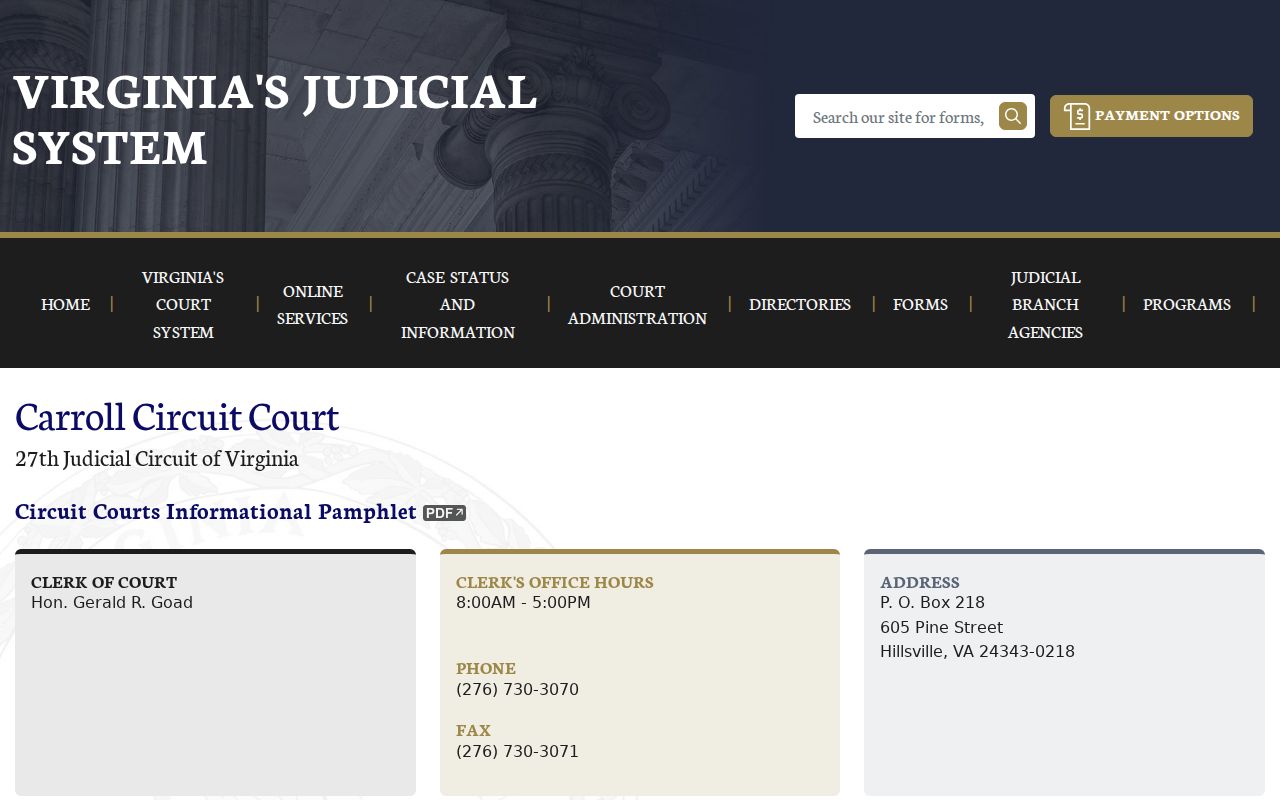
Use the court page to route a circuit question in Carroll County; it cannot confirm a live warrant.
Carroll Probable-Cause Process
A complaint is presented to a judicial officer. The officer reviews the sworn facts and decides whether probable cause supports process. If the legal standard is met, the warrant must identify the person and offense and direct an officer to make the arrest and bring the person before a court.
The official Virginia warrant statute sets the general rule. Carroll's research located no public local warrant form. The case may later sit in Circuit, GDC, or J&DR depending on the charge and parties.
The Virginia warrant statute describes the issuance requirements.
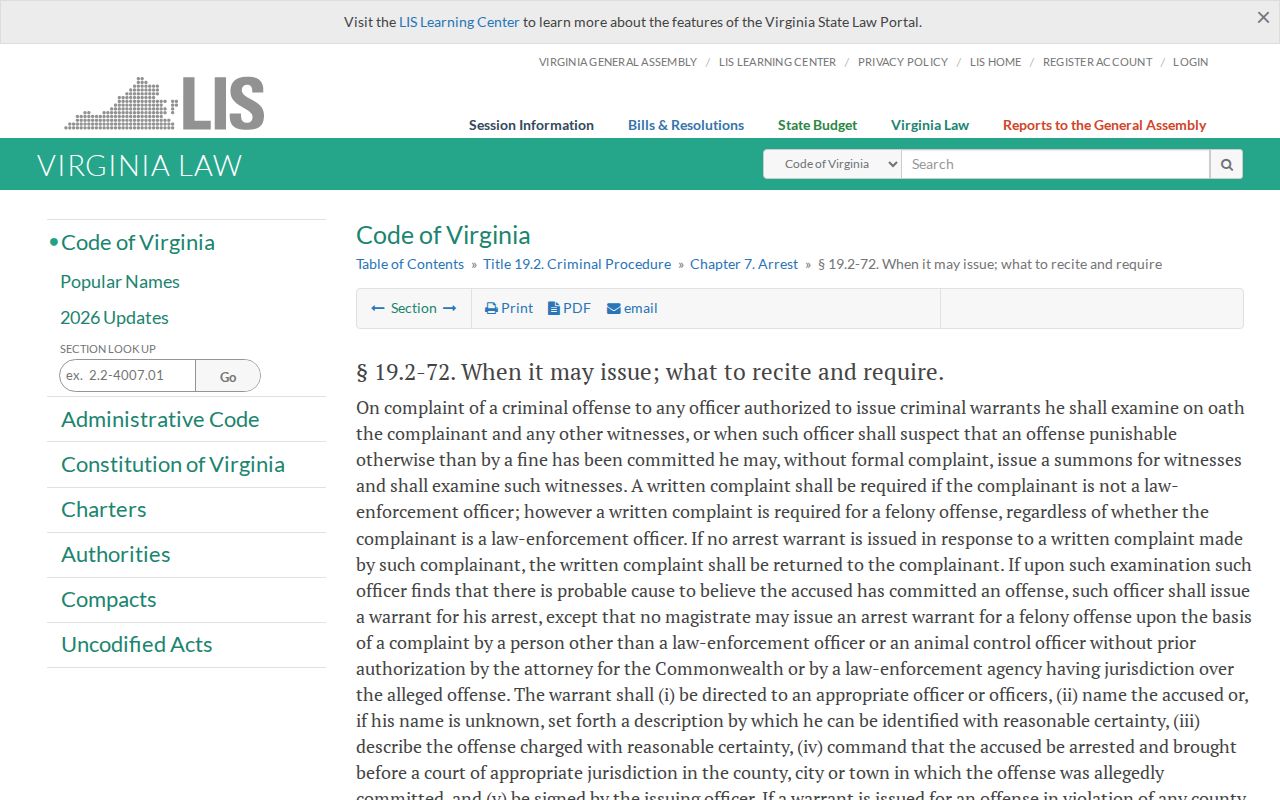
Treat the statute as a guide to process in Carroll County, not as proof of anyone's current record.
Inside a Carroll County Arrest Warrant
A warrant record can show who issued process, the offense, the court, and the next required appearance. Public case pages help with charges and hearing dates. The warrant itself may stay out of online indexes in Carroll County, along with protected investigative material.
| Person named | Name or description stated in the order; avoid publishing private identifiers. |
|---|---|
| Offense | The alleged offense and any code section listed. |
| Issuing authority | The judicial officer or court named in the process. |
| Command | Direction to take the person before the court. |
| Case details | Hearing, disposition, and service entries where public. |
Ask the issuing clerk in Carroll County whether an order is public, sealed, or available only through a specific request.
Carroll Magistrate After Hours
After hours, the magistrate answers. The Virginia regional directory lists the Carroll Magistrate Office as a 24/7 service. Complaint review, probable cause, initial warrant process, and bail routing all run through that office. Its phone is 276-730-3088, and the address is 605-4 Pine Street, #A-50, Hillsville. The office is not a public online search system. Call and ask which court or clerk can answer the current process question. Once a case sits on a Carroll County docket, the clerk is usually the better contact for dates, filings, and payment procedure. The official magistrate directory carries the local listing.
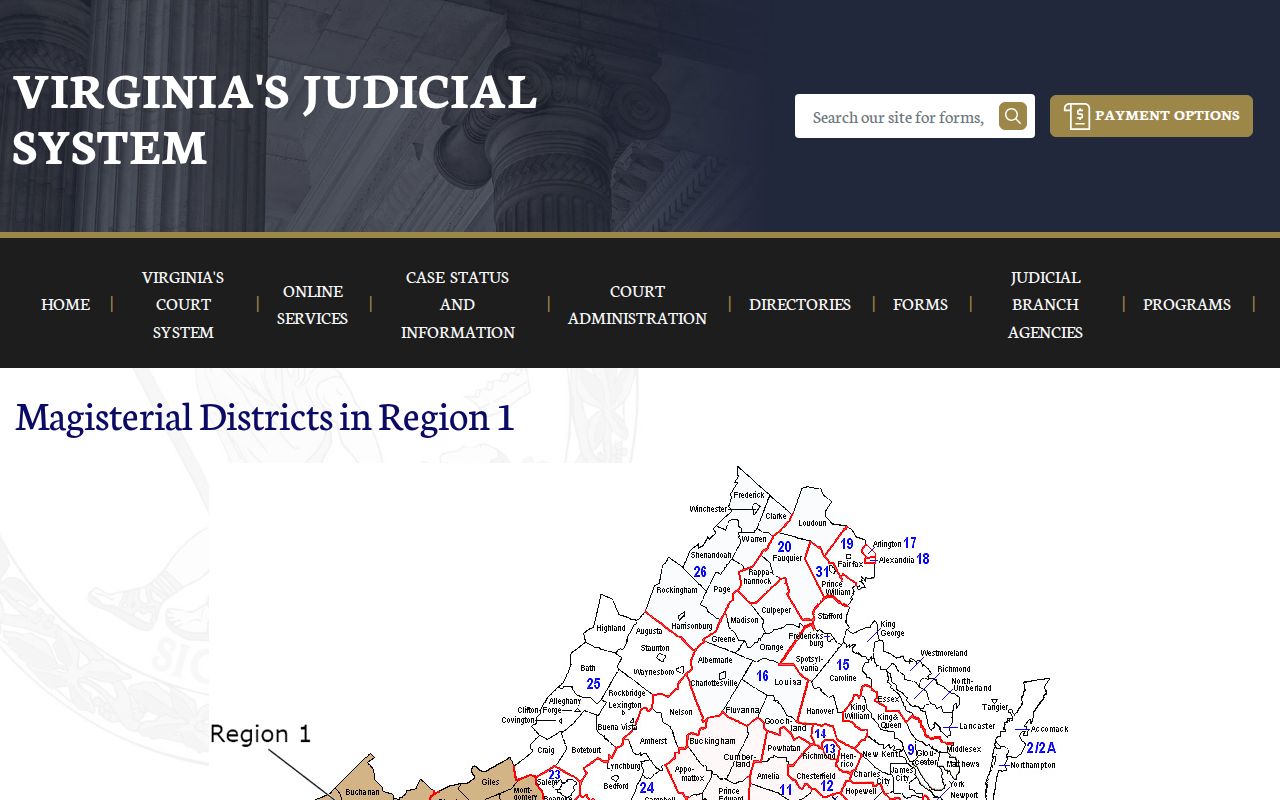
No Carroll-specific online complaint form or warrant-recall form was located.
Serving Arrest Warrants in Carroll County
Once issued, a warrant has to be served. Virginia Code § 19.2-76 governs execution of warrants, capiases, and summonses, including the return of process. The Carroll Sheriff's Office is the county's service channel. Its page also lists court security and civil process among its work, and other officers may carry the same authority under the statute. Serving a warrant is not the same as issuing it. A call to the sheriff will not recall an order, change a bond, or set a court date. The issuing court controls later case procedure. The Sheriff's Office main line is 276-730-3020, and Carroll County residents will find no dedicated warrant-unit phone or online roster there.
Carroll Court and Sheriff Roles
One office is rarely enough. The court in Carroll County keeps the case while law enforcement serves process, and the jail explains general bonding logistics after commitment.
Traffic cases, misdemeanors, and preliminary felony hearings belong to Carroll GDC at 276-730-3050. J&DR matters go to that clerk at 276-730-3049, with confidentiality limits. The County criminal-division page covers the Carroll County circuit docket and record path.
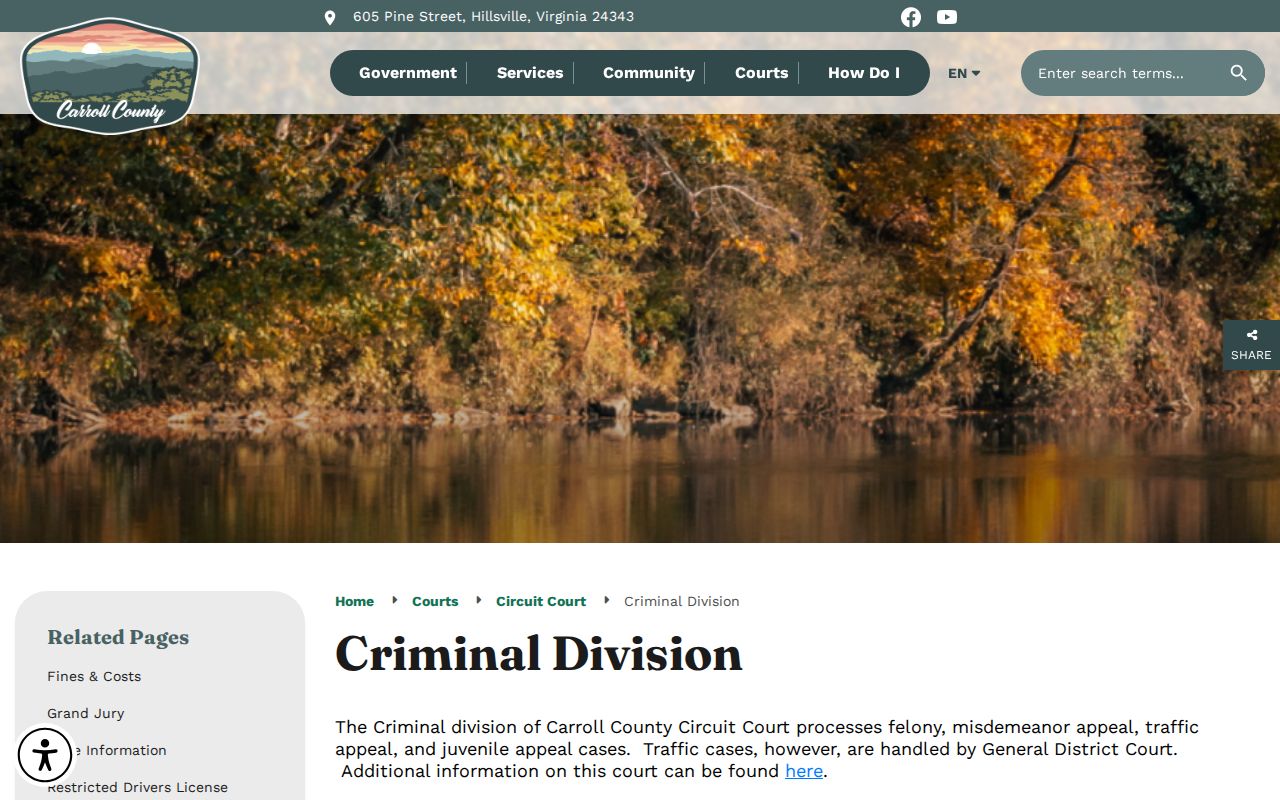
For a local felony file, contact the Circuit criminal division or Circuit Clerk.
Arrest, Summons, and Bench Process
These labels mark different paths. A summons directs an appearance. An arrest warrant commands an officer to bring a person before a court, while a bench warrant or capias in Carroll County usually follows a court event or a failure to appear.
| Term | How it begins | Where Carroll questions go |
|---|---|---|
| Arrest warrant | Sworn complaint and probable-cause review | Magistrate or issuing court |
| Summons | Order to appear | Court that set the appearance |
| Bench warrant / capias | Missed court duty or specified later process | Court that issued the order |
Use the exact term shown by the clerk.
If There's an Arrest Warrant for You
Ask which court issued the process. Find out what the order is called and whether the next step calls for counsel, a motion, an appearance, or a bond. If you have a lawyer, call that attorney first. In Carroll County, the clerk explains court procedure, but a lawyer advises on rights and options.
Confirm before going in. Carroll has no verified universal walk-in surrender policy, recall form, or cash-bond schedule. Do not assume a visit, phone call, or payment cancels an order.
Keep every written notice and any proof of payment or contact. For broader steps, the Carroll County warrant overview walks through the local office chain without promising an outcome.
Carroll Bond and Jail Questions
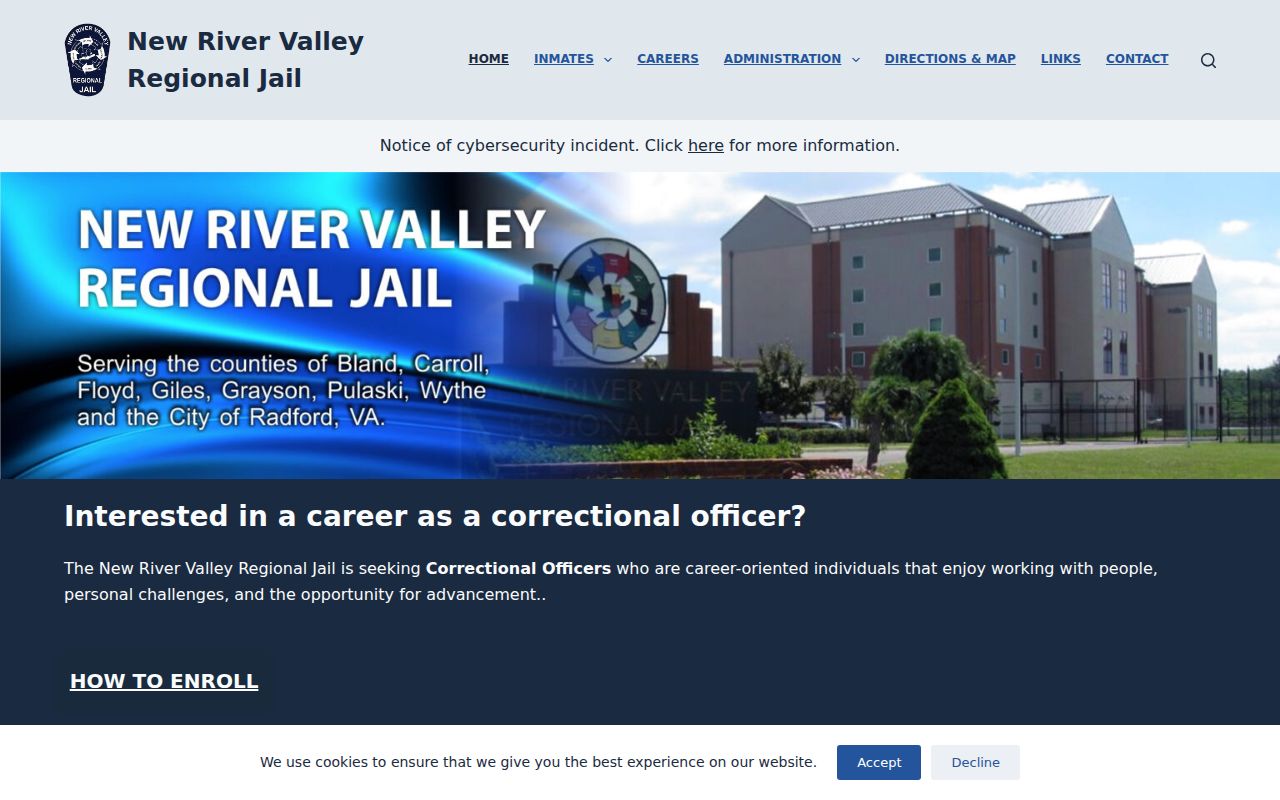
After an arrest on a Carroll County warrant, New River Valley Regional Jail says the person goes before a magistrate for a pretrial bail hearing. The outcomes vary. The jail describes personal-recognizance release, unsecured bond, secured cash, property, or surety options, and no-bail holds. A judge can revisit that. The court may lower a bond or arrange recognizance after commitment. The main line is 540-643-2000, at 108 Baker Road, Dublin. The site posts no defendant-specific bond lookup and no Carroll County bond schedule. The jail endorses no bonding company. DCJS licensing fees are separate from a defendant's bond and from a bondsman's premium. The jail website carries the general facility and bonding details.
Ask the court or magistrate about the actual bond terms in a specific matter.
Carroll J&DR and Protected Cases
Juvenile and family matters in Carroll County belong to the J&DR court, but its records stay closed to the public. The statewide self-help service puts it plainly: J&DR case information is not online for public search. The clerk decides what a party or authorized relative may receive. Call the J&DR Clerk at 276-730-3049 to ask what identity or authorization papers you need. Keep juvenile names, photos, addresses, and family details off social media and public forums. If someone faces immediate danger, use emergency services rather than any records channel.